

Biden Pushes Shots, Not More Restrictions as Fears Grow Over New Omicron Variant
President Joe Biden will urge Americans to get vaccinated and to receive a booster shot as he seeks to quell concerns Monday over the new COVID-19 variant omicron, but won’t immediately push for more restrictions to stop its spread.
Biden is set to speak later Monday to emphasize the importance of vaccination to protecting against all variants of the COVID-19 virus and the urgency of vaccinating the roughly 80 million Americans aged 5 and up who haven’t received a shot. But he was not expected to announce any new virus-related restrictions, beyond last week’s move to restrict travel from South Africa and seven other countries in the region effective Monday.
Dr. Ashish Jha, Dean of Brown University’s School of Public Health, said while there were still no cases of variant identified in the U.S., he assumes it is already in the country “and we’ll have an answer in the next few days.”
Speaking on NBC’s TODAY show, Jha said the data from South Africa suggests that the variant spreads quickly, but cautioned that at this point “we can only make presumptions about transmissibility” and more careful study is needed to confirm if it’s because of omicron or other factors.
“Careful studies take time,” Jha said. “You have to grow the virus, run the tests, see what’s happening in people. There is no way to go any faster than that.”
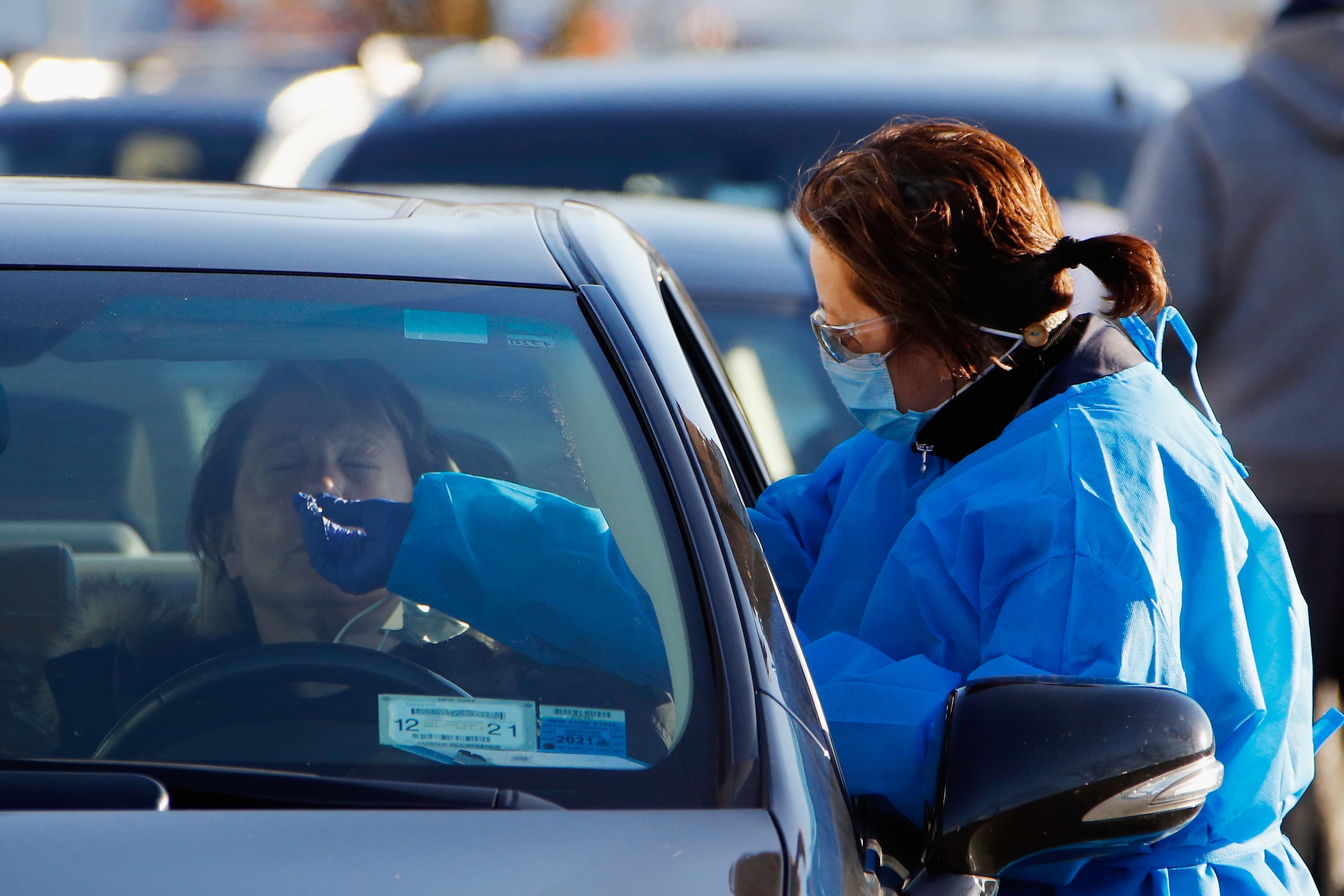

Asked whether the omicron variant can evade the existing COVID-19 vaccines or natural antibodies, Jha said the chances are “extremely unlikely.” The question for scientists, he added, is whether the vaccines are a little less effective or a lot less effective in protecting against the variant and they hope to know in the next week or two.
Dr. Anthony Fauci, the nation’s top infectious disease expert and Biden’s leading COVID-19 adviser, also said Monday that “we really don’t know” how dangerous omicron is compared to earlier strains, calling speculation “premature.”
Officials said the move to limit most travel from the countries where omicron was first identified was meant to buy time for the U.S to learn more about the variant. But Fauci said it would eventually reach the U.S. and could, like the delta variant before it, become the dominant strain, saying omicron “has a transmissibility advantage” over other variants.
Pharmaceutical companies are already tweaking their existing COVID-19 vaccines to better attack the omicron variant, but Fauci said Americans should make it a priority to get either their first shots or a booster dose now, rather than waiting for a newly formulated shot.
“I would strongly suggest you get boosted now,” he said.
He added that depending on what scientists learn about the omicron variant in the coming weeks “we may not need” targeted boosters to contain that strain of the virus.
Over the weekend, the list of countries that have spotted the new variant in travelers grew. Portugal detected 13 cases linked to the new variant among members of a single soccer club — only one of whom had recently traveled to South Africa.
On Friday, WHO designated it as a “variant of concern,” its most serious designation of a COVID-19 variant, and called it “omicron” as the latest entry into its Greek alphabet classification system designed to avoid stigmatizing countries of origin and simplify understanding.
The U.N. health agency said it wasn’t clear whether omicron is more transmissible — more easily spread between people — compared to other variants like the highly transmissible delta variant. It said it wasn’t clear if infection with omicron causes more severe disease, even as it cited data from South Africa showing rising rates of hospitalization there — but that could just be because more people are getting infected with COVID-19, not specifically omicron.
So far, the main difference with other variants appears to be that there may be an increased risk of reinfection with omicron — in other words, that people who’ve already had COVID-19 could get reinfected more easily. There is no indication yet the variant causes more severe disease.
The coronavirus mutates as it spreads and many new variants, including those with worrying genetic changes, often just die out. Scientists monitor COVID-19 sequences for mutations that could make the disease more transmissible or deadly, but they can’t determine that simply by looking at the virus.
The omicron variant appears to have a high number of mutations — about 30 — in the coronavirus’ spike protein, which could affect how easily it spreads to people.
To date, delta is by far the most predominant form of COVID-19, accounting for more than 99% of sequences submitted to the world’s biggest public database.


No comments